
Protection That Highlights Natural Wood Character
Deck Staining in Winchester for outdoor surfaces requiring moisture protection and appearance enhancement
Kentucky's humidity and seasonal rain cycles drive moisture into unprotected wood, causing grain swelling, surface cracking, and color loss that leave decks looking gray and neglected. Deck staining from J&T Pressure Washing protects wood from moisture penetration, sun exposure, and seasonal weather conditions while enhancing natural grain patterns and color. The company hand sands every deck before staining to create a smooth surface that allows even stain penetration and a higher-quality finished appearance, available in standard colors, two-tone designs, or multi-color applications based on customer preference and deck condition.
Staining seals wood fibers against water infiltration while allowing the material to breathe, preventing the trapped moisture problems that occur with impermeable sealers. The process involves surface preparation, product selection matched to wood type and exposure level, and application techniques that avoid lap marks and puddling. Different stain types offer varying levels of opacity, UV protection, and longevity, with transparent stains showing more grain and solid stains providing greater color coverage.
Schedule a free estimate to discuss stain color options, design preferences, and the preparation work required before application.
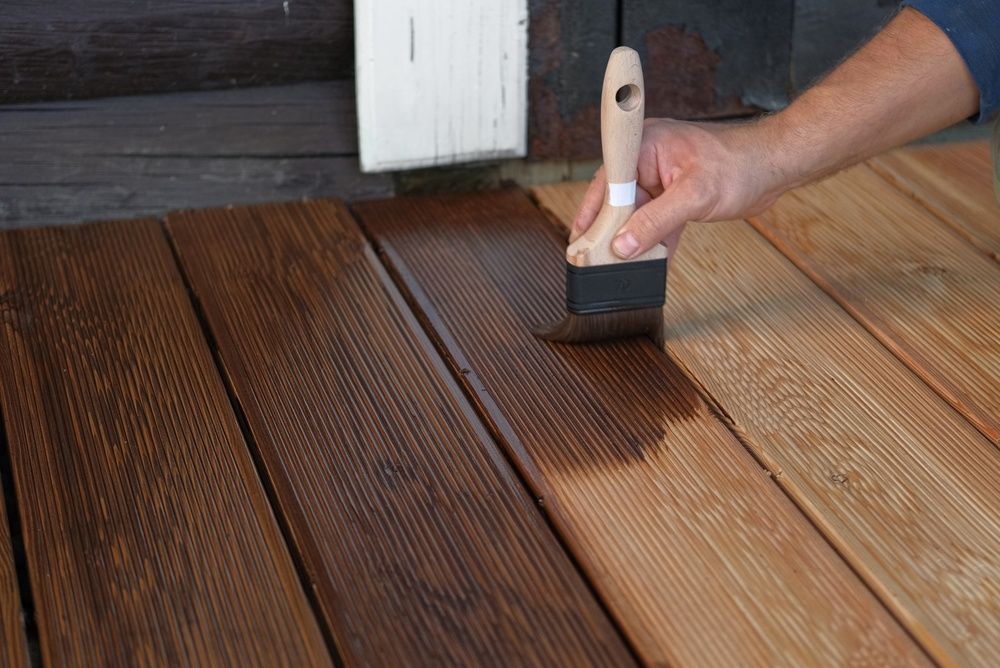
How Staining Protects Wood Surfaces
Proper deck staining begins with hand sanding to remove raised grain and create a uniform texture that ensures consistent product absorption across all boards, railings, and trim. The stain is then applied in controlled passes that saturate the wood without creating drips or uneven pooling, with attention to end cuts and joints where moisture typically enters. Two-tone and multi-color designs require masking and staged application to create clean transitions between color zones without bleeding or overlap.
Once staining is complete, water beads on the surface rather than soaking in immediately, the wood displays richer color with visible grain detail, and the deck resists the gray weathering that untreated surfaces develop within a single season. The stain layer blocks UV rays that break down lignin and cause fading, while its moisture resistance prevents the swelling and shrinking cycles that lead to surface cracks and splinters.
The service includes surface preparation, hand sanding, and stain application, but maintenance coats every two to three years are typically needed to sustain protection as foot traffic and weather gradually wear down the finish. Darker stains tend to show wear patterns sooner than lighter tones, and horizontal surfaces require more frequent recoating than vertical railings due to greater exposure.
Answers to Frequent Service Questions
Property owners in Winchester and nearby communities typically ask about color selection, application timing, and how different stain types perform over time.
What is the difference between transparent, semi-transparent, and solid stain?
Transparent stain shows the most wood grain and requires more frequent recoating, semi-transparent offers moderate grain visibility with better UV protection, and solid stain provides maximum color coverage and longevity but hides most natural wood patterns.
How does hand sanding before staining improve the finished result?
Sanding removes the rough, fuzzy grain raised by moisture exposure and creates a smooth surface that allows stain to penetrate evenly, preventing blotchy color and ensuring a consistent appearance across the entire deck without streaks or light spots.
When is the best time to stain a deck in Winchester?
Late spring through early fall offers the most consistent temperatures and lower humidity for proper drying, though scheduling should avoid rainy periods and allow at least 48 hours of dry weather after application for the stain to cure fully.
What are two-tone and multi-color stain applications?
These designs use different stain colors on deck boards versus railings, stairs, or trim to create visual contrast and highlight architectural details, requiring careful masking and staged application to maintain clean color separation.
How long does deck stain last before recoating is needed?
Most stains protect wood for two to three years depending on sun exposure, foot traffic, and maintenance, with horizontal surfaces wearing faster than vertical railings and south-facing decks fading sooner due to higher UV exposure.
J&T Pressure Washing provides product and color recommendations based on deck condition, wood type, and how the space is used. Contact the team to review stain options, view color samples, and receive a customized quote that includes all necessary preparation and application work for your outdoor entertainment area.